We set the highest standards in environmental protection and marine vessel services
Przedsiębiorstwo COMAL Sp. z o.o.
10 Kujawska St., 80-550 Gdansk
since 1986


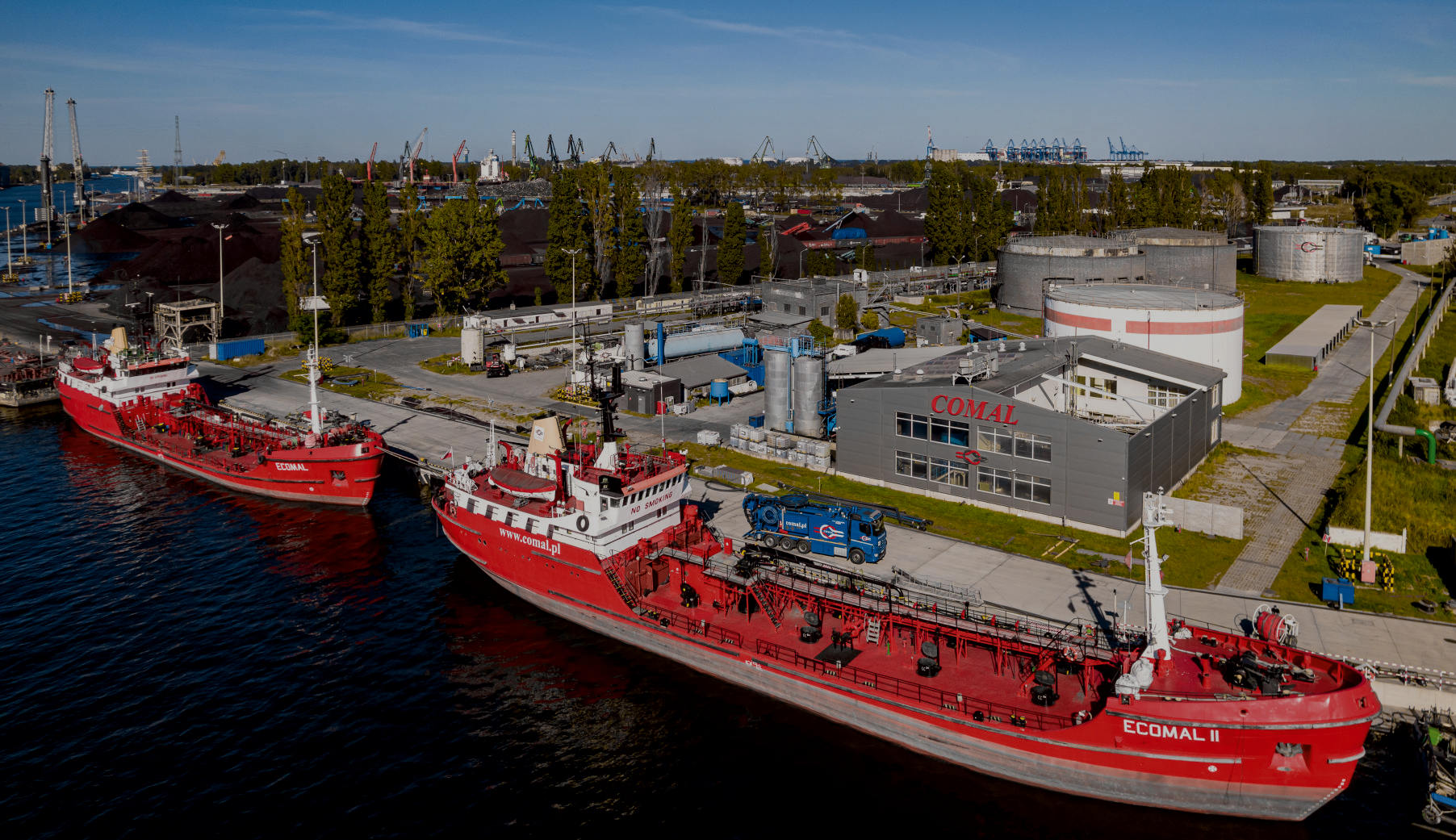
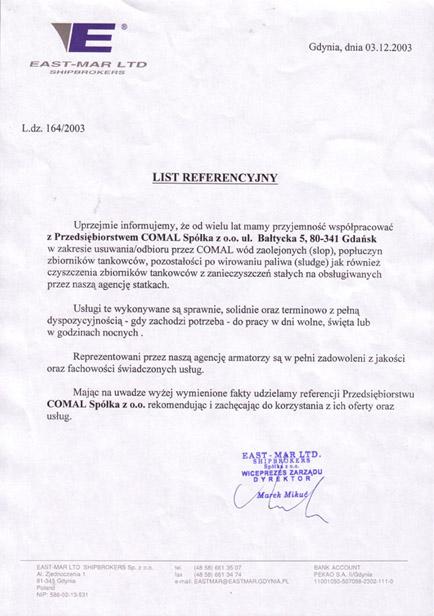
COMAL, located in the seaport of Gdańsk, specializes in the collection, transport & treatment of industrial waste, in particular oily water generated by vessels and land-based industries. Hazardous and non-hazardous waste is processed at the company's own Oily Water Treatment Plant, including authorial technology developed from early 90's.
The COMAL Maritime Transhipment and Storage Terminal provides services for liquid products, including fuels, under the MPC license. Modernization of the Terminal has been underway for several years, with a target storage capacity of 40,000 cbm. The Terminal has the status of a fuel facility under regulations of the Minister of Climate and Environment..
The company has its own road fleet of 17 units covered by a transport license, as well as a fleet of vessels for maritime transport, including two tanker vessels, the ECOMAL and ECOMAL II bunker vessels, the ŻUBR pusher, and a number of tank barges with a total capacity of approximately 9,000 m³.

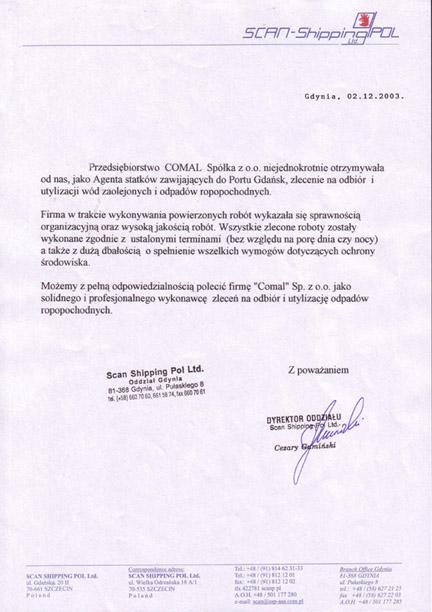
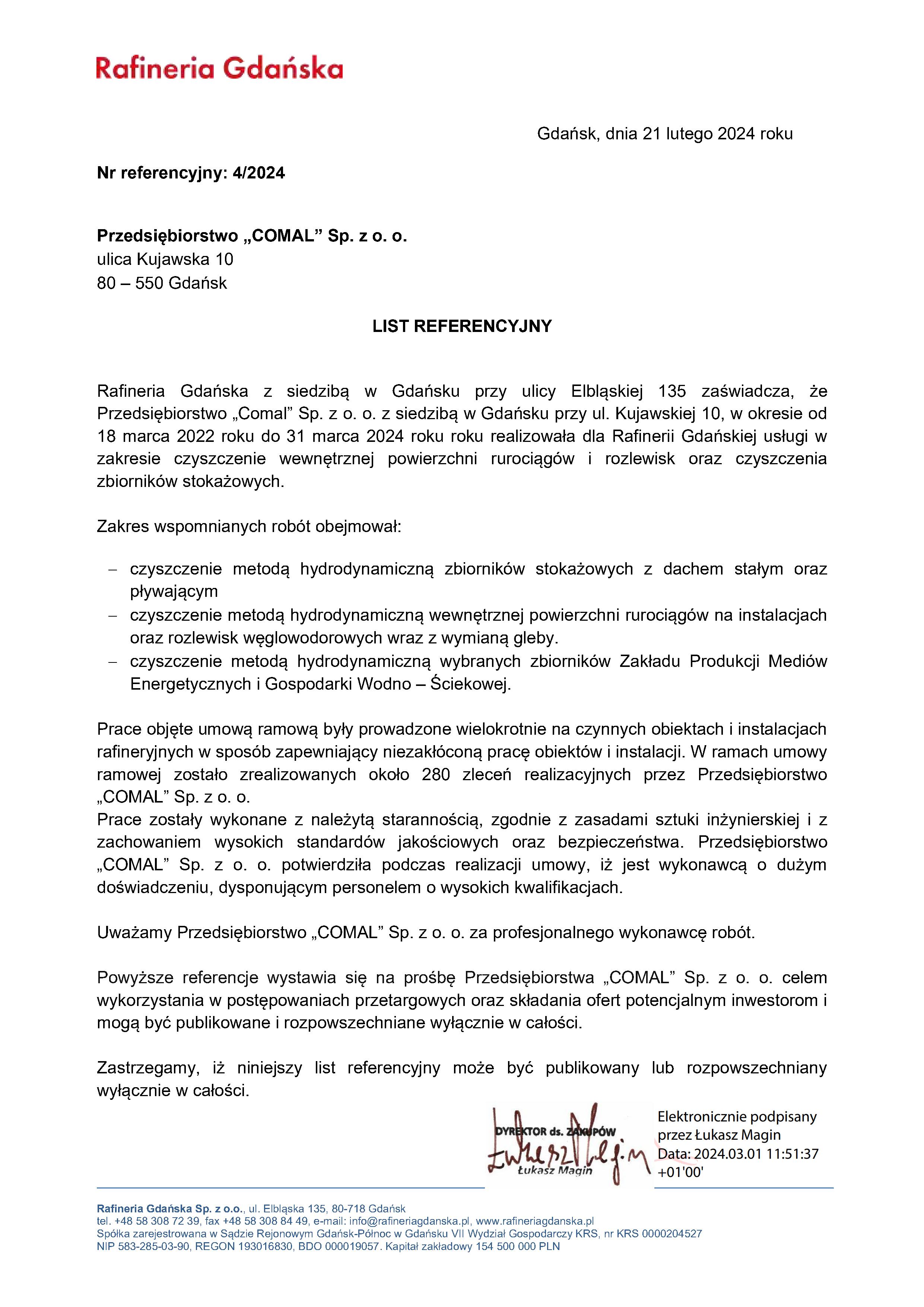
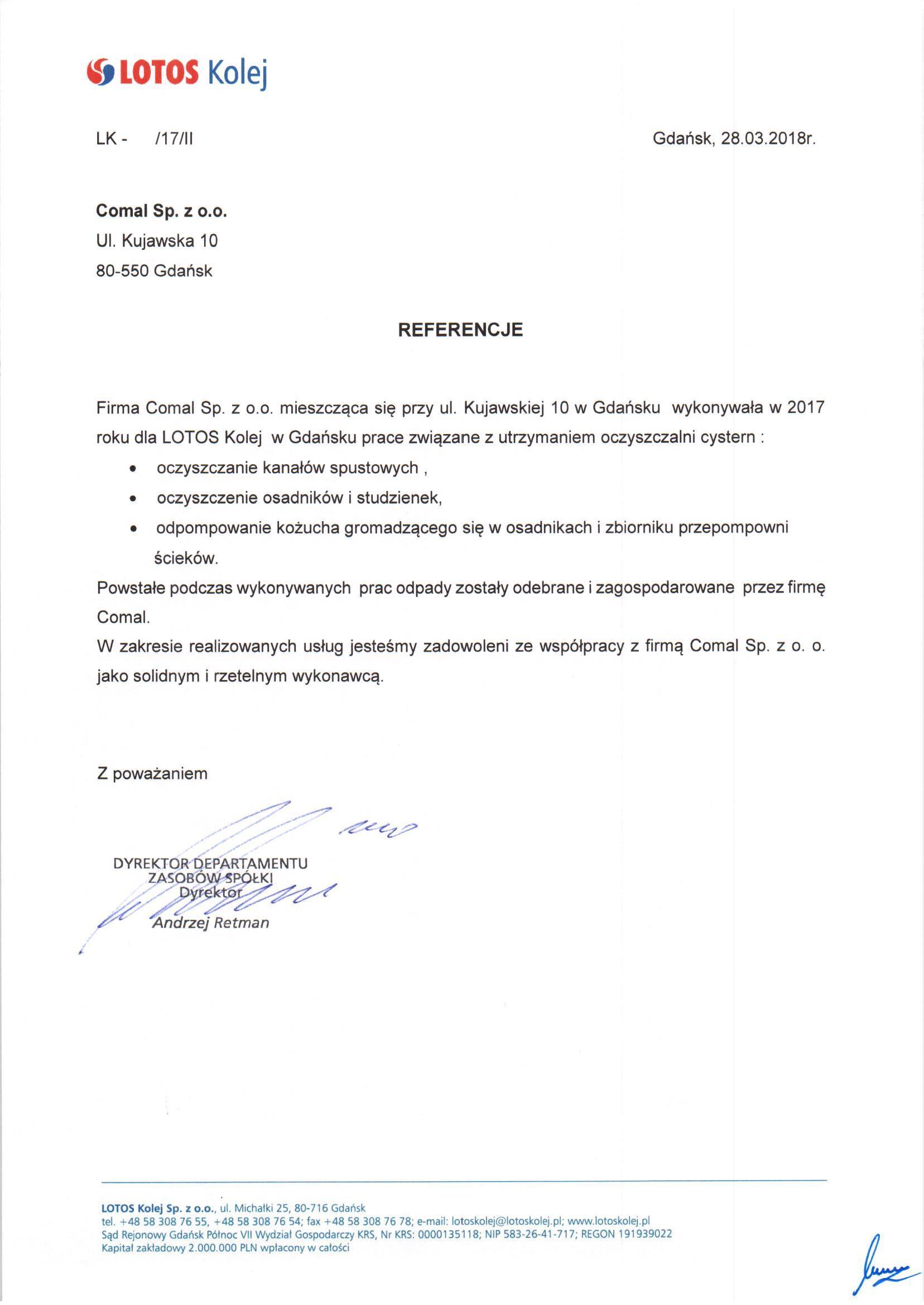
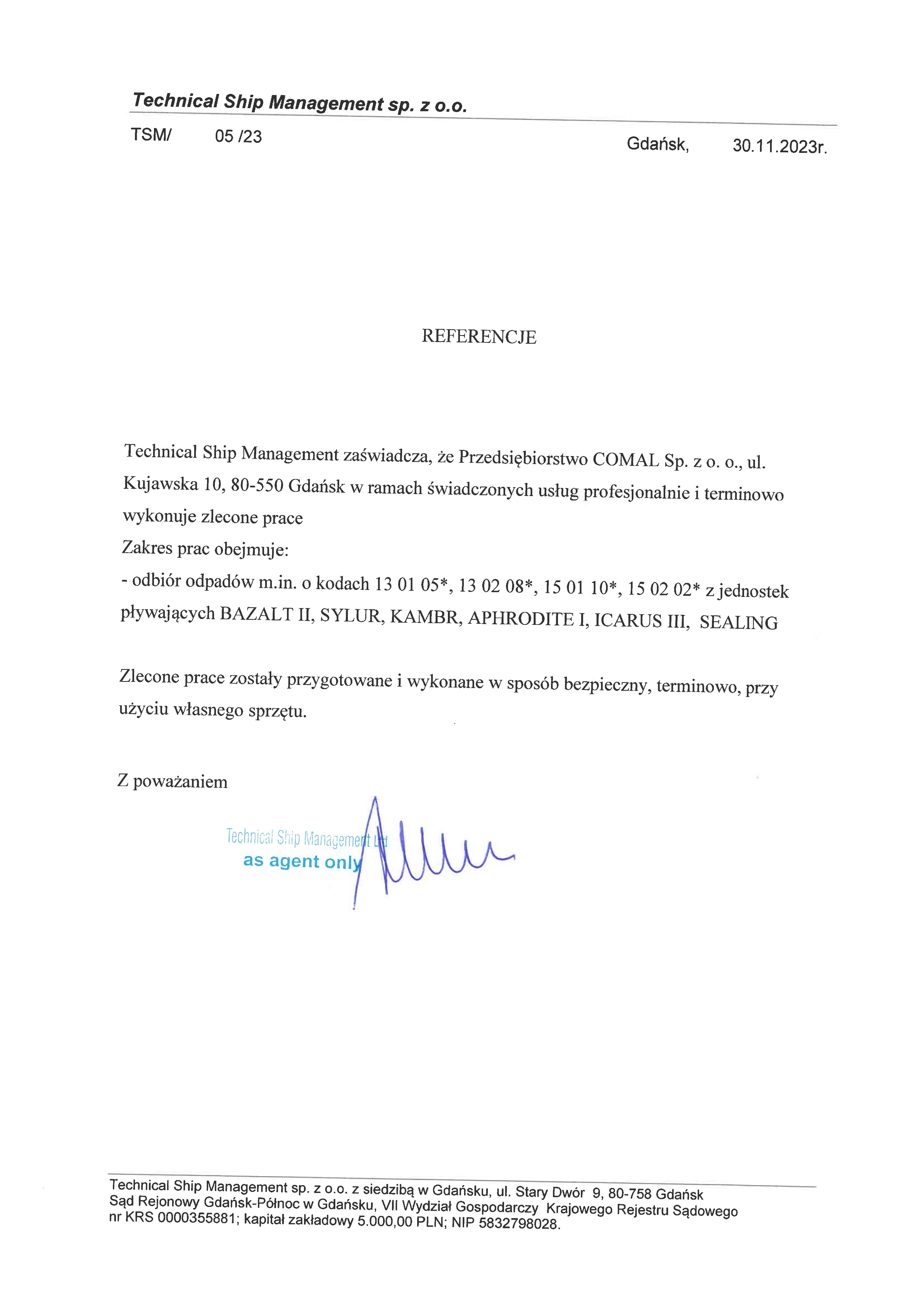
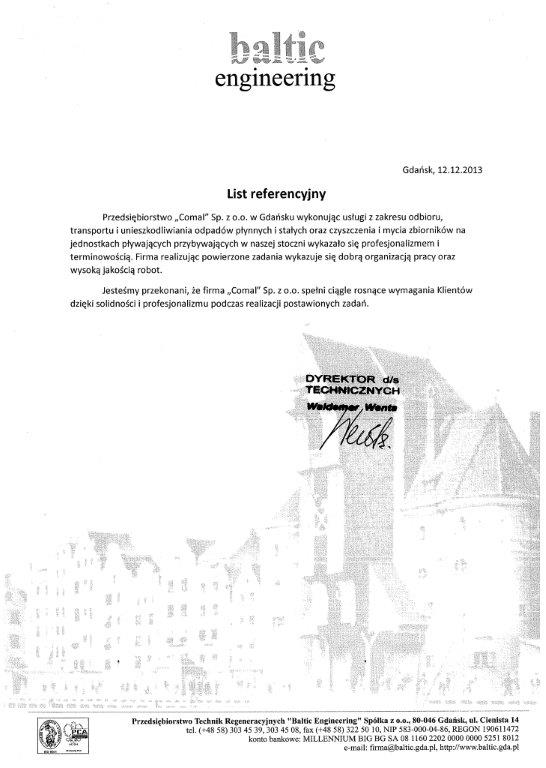
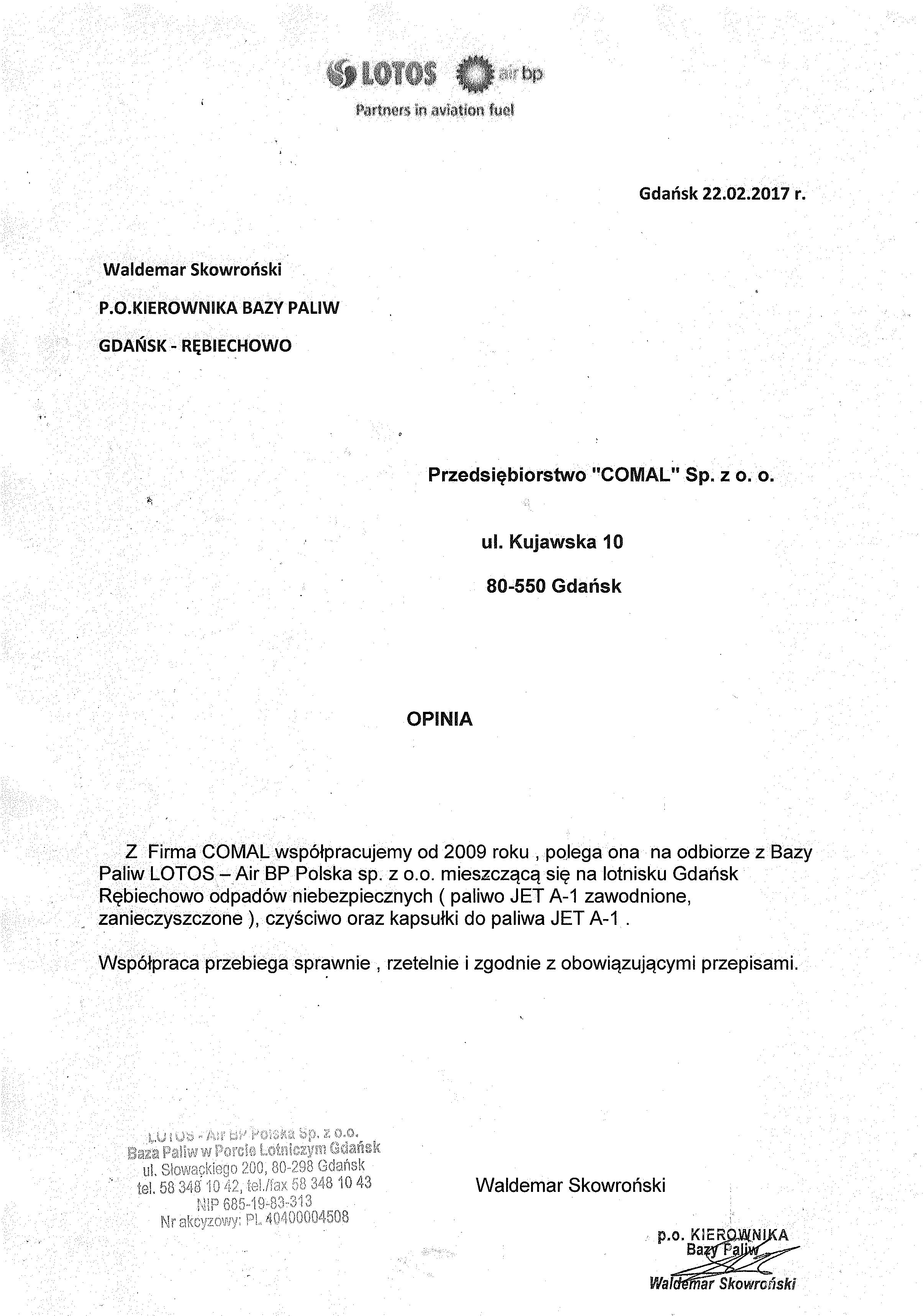
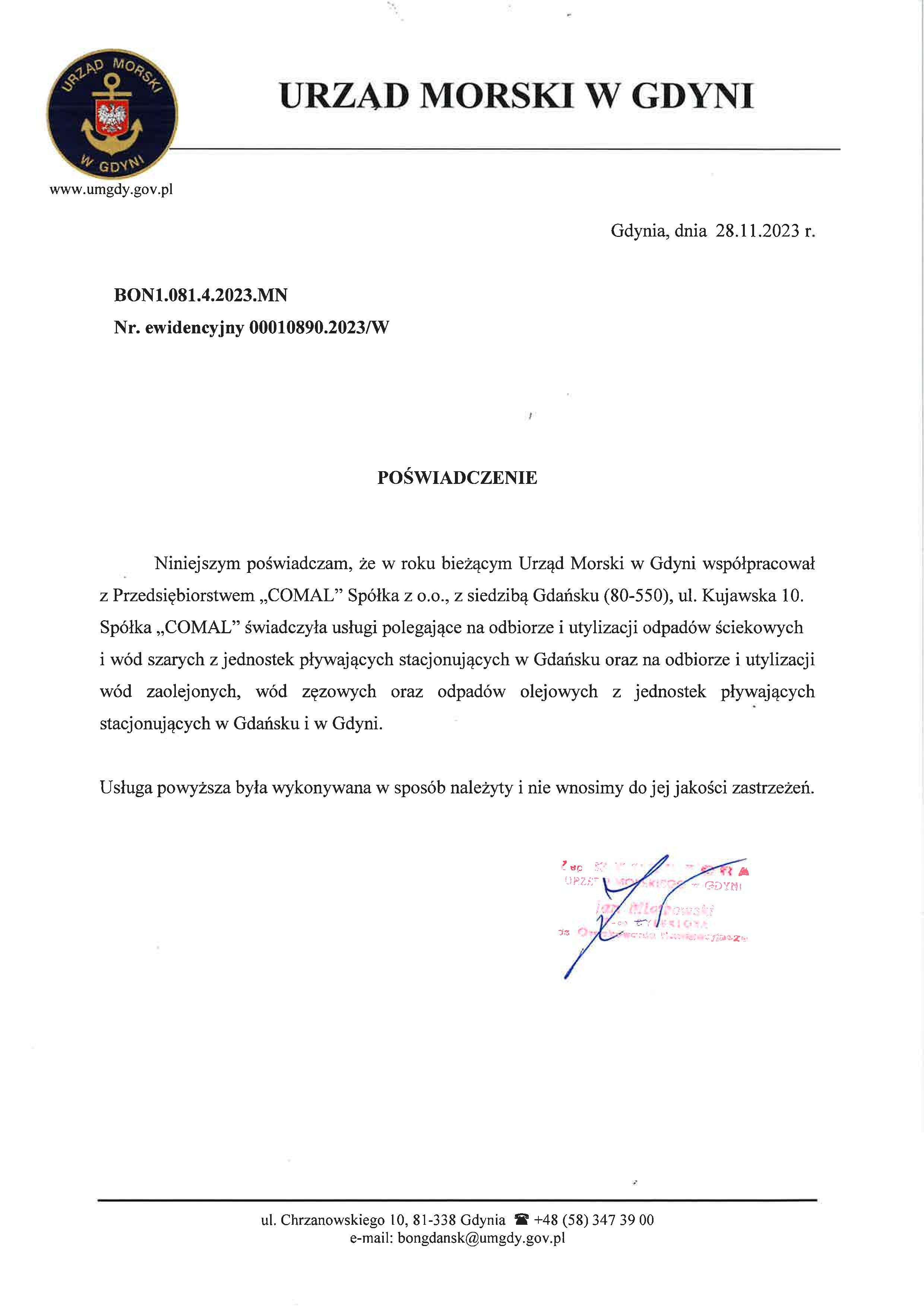
During this period, the company focused mainly on providing services in the field of ship maintenance, in particular on repairs and maintenance of ship automation equipment. The collection and disposal services for used oils from marine vessels were also started.
In connection with the lawsuit pending before the International Tribunal in The Hague, initiated in 1990 by a foreign shipowner against the then state-owned port enterprise for alleged monopolistic practices, violation of the MARPOL Convention, and improper operation of the ship when receiving oily ballast water, the Chief Inspector of Marine Environmental Protection of the Maritime Office in Gdynia at that time encouraged the COMAL Company to engage in ecological activities aimed at protecting the waters of the Bay of Gdańsk and port channels. This encouragement included offering administrative and legal assistance during the country's deep economic crisis.
After years of investments and collaboration with research centers such as the University of Gdańsk and the AGH University of Science and Technology in Krakow, as well as environmental protection specialists, the first (and currently the only) installation in Poland was constructed on the shipyard premises. This installation comprised a mechanical-chemical-biological treatment plant for oily water with a saltwater biocenosis, exceeding the standards set by the Helsinki Convention in terms of filtration and disinfection of sewage from seagoing vessels. The installation incorporates proprietary technological solutions that fulfill all sewage requirements in terms of quality, environmental impact, and sanitation, thereby safeguarding the marine ecosystem.
The industrial sewage treatment plant, referred to by the abbreviated name Oily Water Treatment Plant (OWZ), received a water law permit in May 1995, allowing it to discharge treated sewage into the port canal.
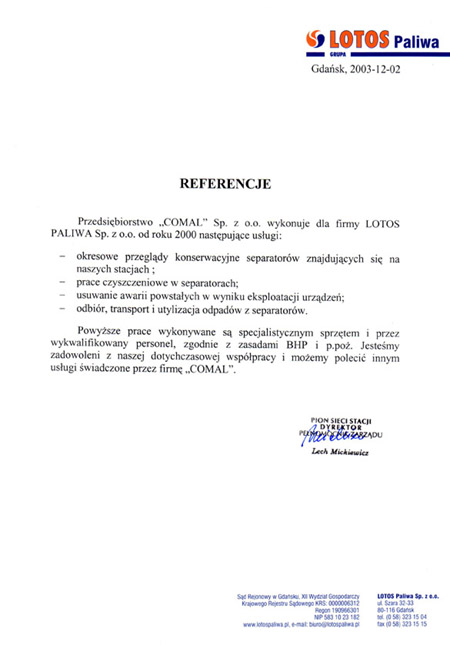
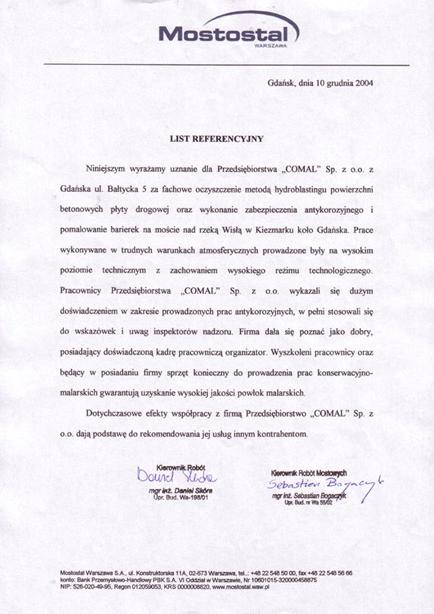
In the mid-nineties, a significant demand in repair and production shipyards for services in the field of anti-corrosion works determined the decision to purchase the expansion of specialized equipment and equipment for carrying out maintenance and painting works, as well as modern methods of cleaning steel and concrete surfaces. These services were successfully performed on the orders of the Gdańsk Shipyard "Remontowa", the Naval Shipyard in Gdynia, the Repair Shipyard "Nauta", Gdynia Shipyard and other industrial plants on the coast.
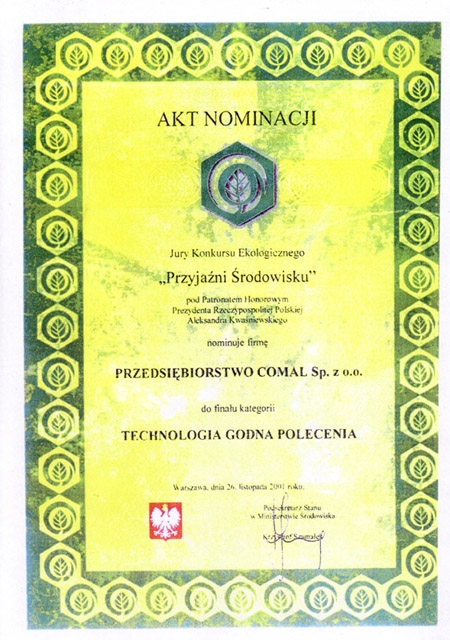
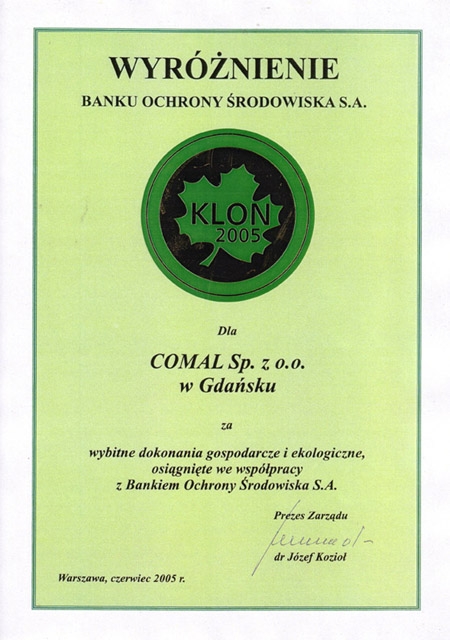
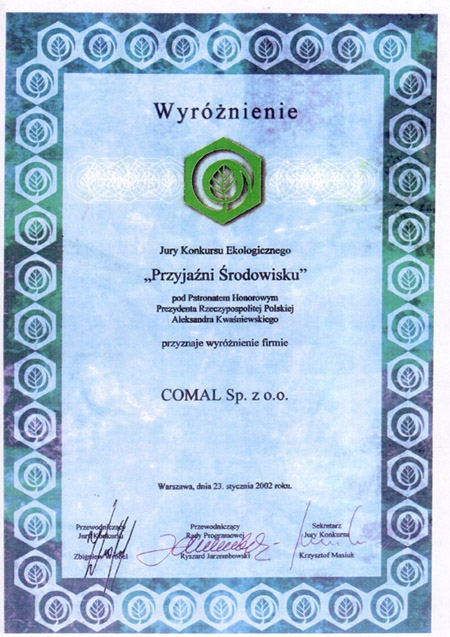
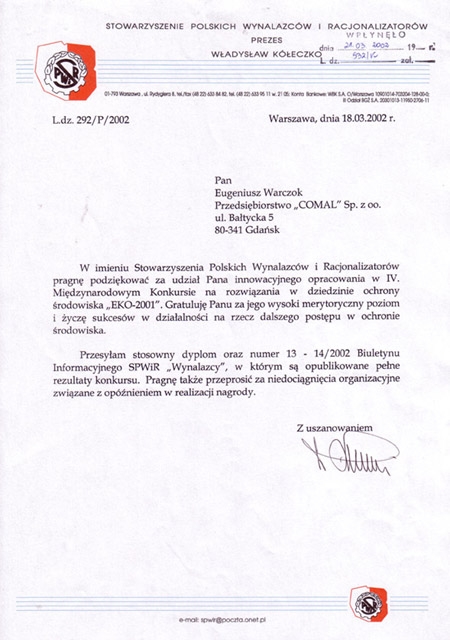
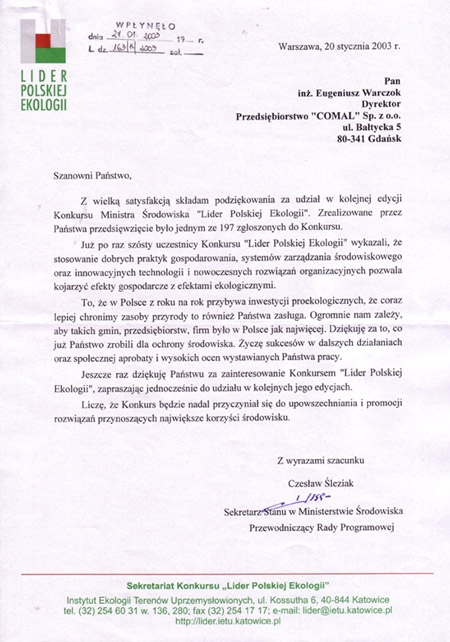
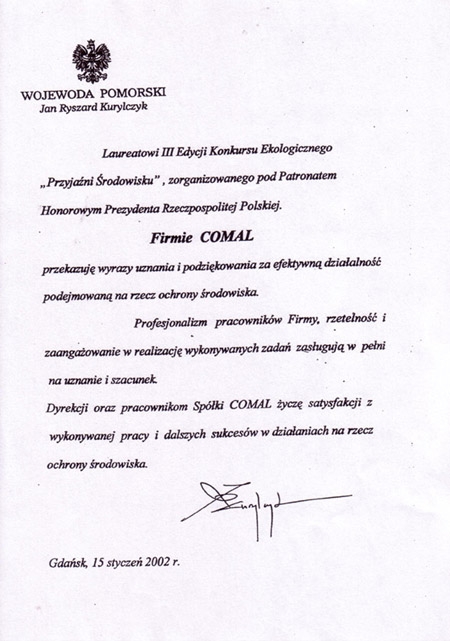
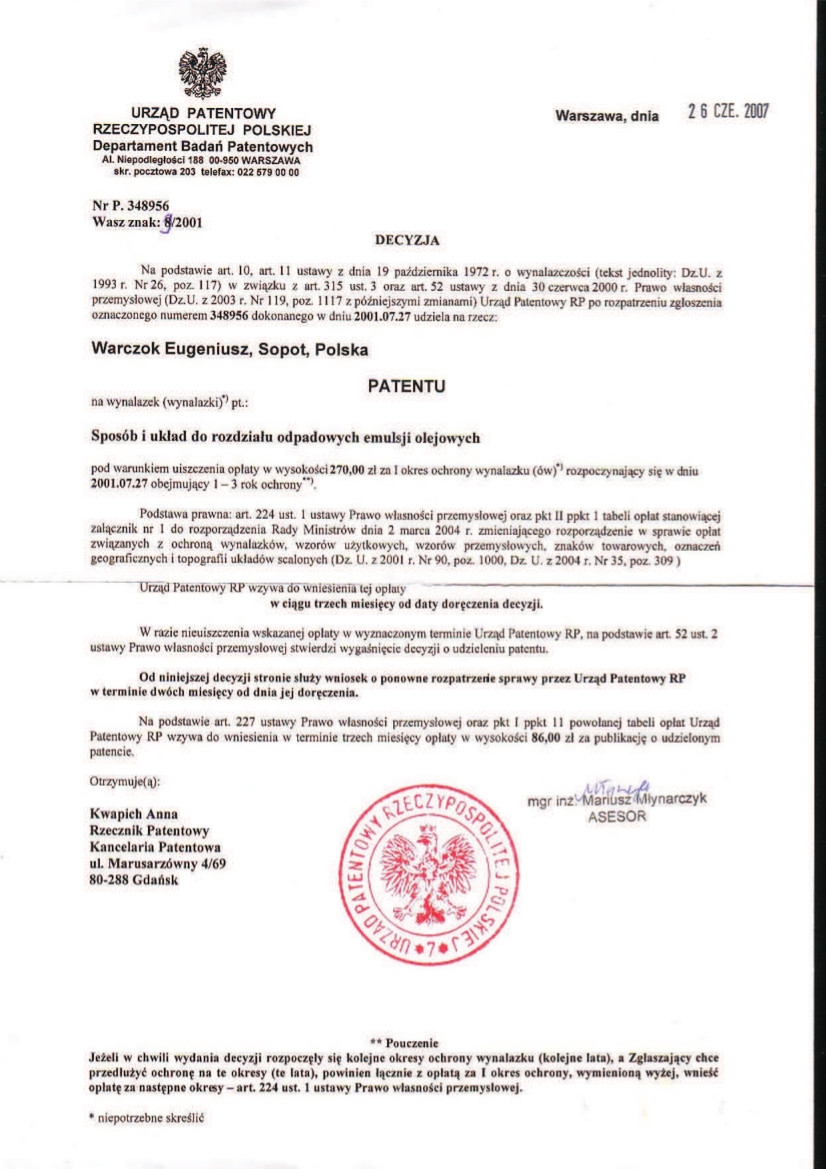
In the 3rd National Competition "Friendship for the Environment", organized in 2001 under the patronage of the President of the Republic of Poland, the company was awarded in the final of the competition in the "Technology Worth Recommending" category. For the progress in the company's development and technological achievements, the company also received individual congratulatory letters from the Minister of Environmental Protection and the Pomeranian Voivode.
The Integrated Permit has been granted to operate a hazardous waste recovery and disposal facility. The quality results of technological processes achieved by the company have been recognized and highly appreciated by the Environmental Protection Departments of the Voivodship and City Office in Gdańsk.
COMAL expanded its infrastructure by acquiring the CPN-2 warehouse facility and launching its own operations there in 2011. The first transshipments of liquid fuels began.
The new Oily Water Treatment Plant, located at 10 Kujawska Str., was designed to expand the range of waste accepted, including shale gas return fluid. The technology was refined based on years of experience in handling difficult waste. The result of this investment is a multi-stage waste treatment facility, comprising a mechanical, chemical, and five-stage biological unit, as well as a final stage of wastewater filtration and disinfection. The OWZ is the only facility in Poland with no restrictions on chloride and sulfide content in wastewater, as defined by its integrated permit.
The modernization of the port quays carried out by the Port of Gdańsk Authority between 2016 and 2021 has brought new opportunities. The COMAL Quay, located within the Dworzec Drzewny quay, has gained updated technical parameters. Furthermore, thanks to the deepening and regulation of the fairway, the permissible draft of vessels entering the Inner Port has been increased. Currently, COMAL can handle vessels of parameters: LOA up to 200 m, draft of up to 10 m, and DWT up to 25,000.
Following the completion of the modernization of the Dworzec Drzewny quay, the company decided in 2024 to modernize the cross-docking facility for liquid fuels and adapt the storage tanks to the current requirements for fuel depots. In February 2025, the company obtained a license for the first phase of the investment – transshipment of liquid fuels. Modernization work is currently underway, aiming to achieve a total storage capacity of 40,000 cbm.



|
Headquarters Przedsiębiorstwo COMAL Sp. z o.o. ul. Kujawska 10, 80-550 Gdańsk |
|
Phone number Tel.: (+48) 58 511 90 90 Tel./Fax.: (+48) 519 303 429 |
|
Write to us: |